Boiler Replacement in Bayside, Queens
When an aging central boiler suffers cracked cast-iron sections, obsolete parts, or chronic mid-winter shutdowns, ongoing repairs become impractical. We provide engineering-grade heat-loss sizing, chimney venting evaluations, and professional boiler replacement Bayside Queens homeowners rely on for long-term comfort.
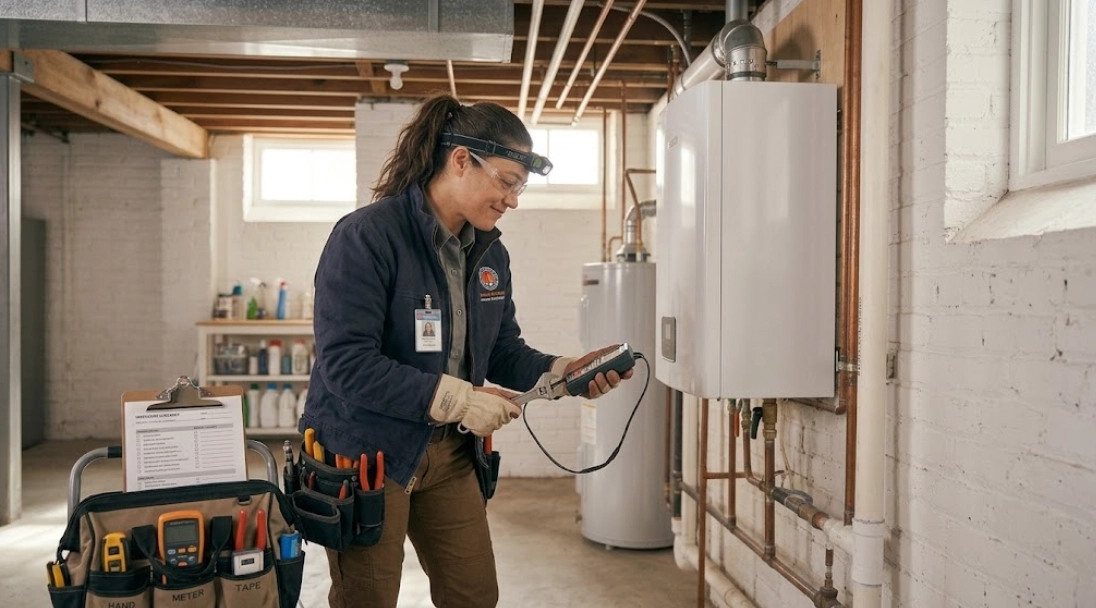
Repair Versus Replacement: Practical Considerations
Evaluating when targeted repairs remain sensible versus when a complete system upgrade is the more prudent investment.
When Boiler Repair Is the Sensible Choice
If your current heating plant is under 15 years old, maintains structurally sound cast-iron sections, and has experienced a failure confined to external serviceable controls—such as an aquastat, thermocouple, zone valve head, or circulator pump—prompt boiler repair in Bayside is usually the most cost-effective solution.
Restoring electrical or mechanical accessories avoids premature capital equipment replacement while keeping your home warm and operational.
When Full Boiler Replacement Is Recommended
When a boiler approaches 20 to 30 years of age, severe internal mineral scale can insulate cast-iron passages, leading to thermal stress fractures and leaks between boiler sections. When cast-iron blocks crack or combustion chambers burn through, repairs are impossible.
Investing in a new boiler installation Bayside Queens property owners trust eliminates repeat no-heat service calls, incorporates modern solid-state safety controls, and ensures dependable operation throughout harsh winters.
Why Accurate Heating Sizing Matters in Bayside Homes
A major mistake in residential heating replacement is simply matching the BTU rating of an existing legacy boiler. Many vintage units installed in Bayside detached homes were significantly oversized to compensate for drafty single-pane windows that have since been replaced:
- Steam System Sizing (EDR Measurement): Steam boilers cannot be sized based on square footage alone. Sizing must match the total condensing capacity of every connected radiator (Equivalent Direct Radiation). Under-sizing leaves distant radiators cold, while over-sizing causes high fuel bills and violent pipe banging. Learn more on our radiator repair and steam balancing page.
- Hydronic System Heat-Loss Sizing: Hot-water closed-loop boilers are sized using standard heat-loss calculations that factor in wall insulation, attic R-values, window surface area, and perimeter infiltration.
- Prevention of Short-Cycling: Properly sized modern boilers fire smoothly and stay on long enough to achieve thermal equilibrium, preventing short-cycling wear on gas valves and igniters.
Oil-to-Gas Conversions in Queens
Considering a boiler conversion Bayside Queens from heating oil to natural gas?
Switching to natural gas eliminates fuel deliveries and bulky basement oil tanks. However, gas conversions require:
- Verification of utility gas meter and street lateral capacity with National Grid.
- Installation of a code-compliant UL-1777 stainless steel chimney liner to prevent acidic condensation from destroying vintage masonry flues.
- Certified decommissioning or removal of oil storage tanks per FDNY guidelines.
Our Methodical Boiler Replacement Workflow
Every installation adheres strictly to the NYC Department of Buildings (DOB) mechanical and fuel gas codes.
Radiation & Heat-Loss Survey
We measure connected radiators or calculate room-by-room heat loss to specify the exact net BTU capacity required for your property.
DOB Permitting & Flue Prep
We prepare required NYC DOB work permits, inspect chimney flue integrity, and install stainless steel venting or direct-vent conduits.
Mechanical Piping & Wiring
We install the new boiler block, configure near-boiler black iron steam headers or hydronic manifolds, and wire safety limit controls.
Combustion Testing & Sign-Off
We perform full draft and combustion testing under load, calibrate low-pressure cutoffs, and guide you through required DOB sign-offs.
Factors Affecting Installation Scope
Every basement in Bayside presents unique architectural and mechanical requirements. Total project scope depends on several factors:
- Near-Boiler Piping Configuration: Correct steam near-boiler piping requires properly sized risers and drop-headers to prevent wet steam carryover.
- Chimney Flue Condition: Deteriorated brick flues require relining with stainless steel to prevent acidic flue gas moisture damage.
- Domestic Hot Water Integration: Connecting an indirect domestic hot-water storage tank or updating a separate water heater. Learn more on our water heater repair services page.
- Basement Access Clearances: Narrow exterior basement stairs or historic doorways common in Bayside require careful rigging and equipment handling.
Protecting Your New Boiler Investment
Proactive seasonal care extends the lifespan of your new heating system:
- Weekly Steam Blowdowns: Flushing sediment from the low-water cutoff chamber prevents float seizing.
- Annual Pre-Winter Tune-Up: Vacuuming burner tubes, checking flame sensors, and inspecting chimney draft before freezing weather arrives.
- Water Quality Management: Maintaining clean boiler water and treating for hardness minimizes scale accumulation.
- Radiator Valve Maintenance: Inspecting manual supply valves and replacing stuck air vents ensures balanced heat distribution.
Related Heating & Mechanical Solutions
Comprehensive mechanical care supporting residential properties across Bayside, Queens.
Steam Heat & Radiator Repair
Resolve cold radiators, knocking steam pipes, and failing air vents to achieve balanced, quiet heating across every room.
Explore Radiator Repair →Water Heater Repair
Fix loss of hot water, burner outages, leaking fittings, and indirect storage tanks connected to your central residential boiler.
Explore Water Heater Services →Boiler Heating Diagnostics
Our core specialty in Bayside: diagnosing steam and hot-water heating systems to keep your home warm all winter long.
View Boiler Repair Solutions →Common Questions on Boiler Replacement in Bayside
How do you determine the correct boiler size for a Bayside home?
For steam systems, equipment sizing is determined strictly by measuring the total connected radiation (square feet of equivalent direct radiation, or EDR) across all radiators in the building. For hot-water hydronic systems, sizing is calculated using an accurate Manual J heat-loss assessment based on home square footage, insulation levels, window exposure, and exterior wall construction.
What permits are required for a boiler replacement in New York City?
In New York City, boiler replacements require filing work applications with the Department of Buildings (DOB), obtaining a licensed master plumber work permit, ensuring chimney or direct-vent compliance, and completing required post-installation DOB safety inspections.
Can I convert an older oil-burning boiler to natural gas in Bayside?
Yes, provided adequate natural gas supply capacity exists from National Grid at your street lateral. An oil-to-gas conversion typically requires installing a certified stainless steel chimney liner, updating gas supply headers, and decommissioning or legally abandoning existing oil storage tanks in accordance with NYC Fire Department (FDNY) and DOB regulations.
Why shouldn't I simply replace my existing boiler with one of the exact same BTU rating?
Many legacy boilers installed decades ago were substantially oversized to compensate for drafty windows and uninsulated roofs that have since been upgraded. Installing an oversized replacement results in short-cycling, increased fuel consumption, higher mechanical wear, and uneven indoor temperatures.
Schedule an In-Home Boiler Replacement Assessment
Speak with our heating specialists to evaluate your existing heating plant, discuss oil-to-gas conversion feasibility, or calculate proper sizing.
Call (315) 202-8009 Today