Steam Heat & Radiator Repair in Bayside, Queens
Cold cast-iron radiators, spitting air vents, and violent knocking pipes disrupt winter comfort and damage flooring. We provide expert steam balancing, pitch correction, valve replacements, and dependable radiator repair Bayside Queens homeowners count on for silent, balanced warmth.
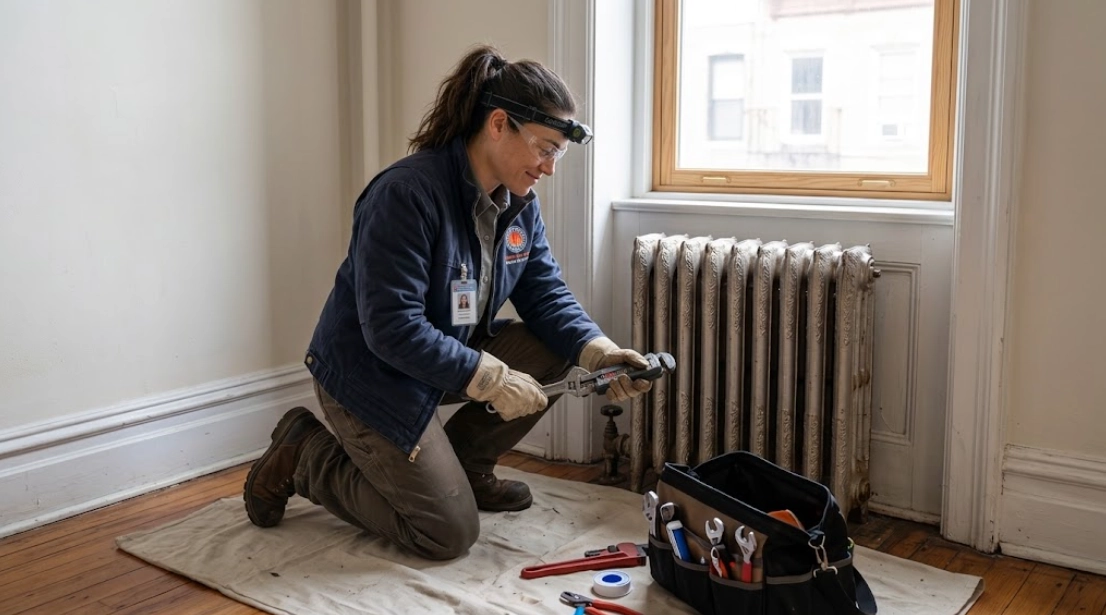
Common Radiator Symptoms & Distribution Problems
Steam radiators are finely balanced mechanical heat exchangers. When individual components fail, heating distribution breaks down.
Stone Cold Radiators
If the boiler is firing but a specific radiator stays completely cold, trapped air is preventing steam entry. This typically points to a blocked air vent or a closed supply shutoff valve.
Loud Banging & Water Hammer
Resolving banging steam pipes Bayside Queens requires eliminating trapped pools of liquid condensate where rising steam crashes violently into standing water.
Leaking Radiator Valves
We provide professional steam radiator valve replacement Bayside Queens, replacing degraded packing graphite, worn brass stems, and seized angle valves that drip onto finished floors.
How Steam Heat Differs from Hot-Water Circulation
Unlike hydronic heating systems that use electric pumps to circulate warm water through pipes, single-pipe steam systems rely entirely on air venting and gravity drainage.
When your boiler boils water, steam expands rapidly through the basement mains and vertical risers. For steam to enter a cast-iron radiator, the cold air filling the empty cast-iron sections must be pushed out through the radiator air vent. Once steam reaches the vent, a temperature-sensitive bimetallic disc or wax pellet expands, sealing the vent shut to contain the heat.
As steam releases its latent heat into your room, it condenses back into liquid water. In a single-pipe system, this liquid condensate must flow back down the exact same pipe that steam is rising through. If the radiator has settled backwards or the valve is throttled partially shut, water pools inside the radiator, causing water hammer, violent vibrations, and cold rooms.
When the Problem Is at the Boiler
Sometimes radiator issues are symptoms of a central boiler defect rather than the radiator itself:
- Excessive System Pressure: If the boiler's pressuretrol is set too high (above 2 psi), steam pressure forces radiator air vents closed prematurely, locking air inside and leaving radiators cold.
- Surging Boiler Water: Dirty boiler water with high oil or mineral concentrations foams violently, sending slugs of hot water up into steam mains that flood air vents.
In these situations, our technicians evaluate both the heat distribution network and the central boiler repair in Bayside controls to restore proper system balance.
Call for System Assessment: (315) 202-8009Our Methodical Radiator Diagnostic & Repair Process
Steam components operate under heat and pressure. We safely service radiator valves, vents, and piping using proven trade techniques.
System Cool-Down & Inspection
We allow the heating cycle to satisfy and confirm zero pressure before inspecting valve stems, unions, spuds, and thermostatic air vents.
Radiator Pitch Verification
Using precision levels, we verify that each radiator maintains a continuous downward slope toward the inlet valve, placing heavy-duty shims where settling has occurred.
Valve & Vent Replacement
We replace seized angle valves with heavy-duty brass steam valves, replace spuds, and install properly ported, adjustable vents matching room heat demands.
Live Steam Cycle Testing
We fire the boiler to operating pressure, verifying smooth venting, rapid steam entry, zero valve stem packing leaks, and complete silent drainage.
Safe Radiator Operation Habits
Understanding single-pipe steam operation preserves your system and avoids accidental damage:
- Never Partially Throttle Valves: On a one-pipe steam radiator, keep the manual shutoff valve 100% open or 100% closed. Partially closed valves create severe banging and rapid valve seat erosion.
- Never Paint Over Air Vents: When painting radiators, remove or tape over air vent orifices. Paint clogs the miniature exhaust holes, preventing steam from entering.
- Do Not Dismantle Hot Radiator Valves: Steam valves operate under scalding steam temperatures. Never attempt DIY packing nut removal while the heating system is active.
Repair Versus Radiator Replacement
Most radiator issues involve valve and vent accessories, but occasionally the cast-iron body requires attention:
- Accessories vs Body: Over 90% of radiator complaints are resolved by replacing air vents, repacking valve stems, replacing supply angle valves, or releveling the unit.
- Freeze Fractures: If a radiator was unheated during sub-zero weather and water condensed inside, expanding ice can crack cast-iron sections, requiring complete radiator replacement.
- Whole-House Modernization: When older homes upgrade their heating plants, exploring our boiler replacement in Bayside services ensures proper steam matching and balanced heat.
Related Heating & Mechanical Solutions
Comprehensive mechanical care supporting residential properties across Bayside, Queens.
Boiler Heating Diagnostics
Our core specialty in Bayside: diagnosing burner problems, pressuretrol limits, and sight glass controls on residential steam boilers.
View Boiler Repair Solutions →Boiler Replacement
Accurate radiation sizing, steam header re-piping, and oil-to-gas conversions engineered for Queens residential properties.
Explore Boiler Replacement →Water Heater Repair
Fixing no-hot-water issues, leaking tanks, burner pilot outages, and indirect domestic water storage tanks in Bayside.
Explore Water Heater Services →Common Questions on Radiator Repair in Bayside
Why is my steam radiator completely cold while others in the house are hot?
The most common culprit is a malfunctioning air vent that has seized in the closed position, preventing cold air from escaping so steam cannot enter. Other causes include a fully or partially closed manual supply valve or improper pipe pitch that traps cold condensate inside the radiator.
Can I adjust room temperature by partially closing a one-pipe steam radiator valve?
No. In a single-pipe steam system, the radiator supply valve must be either 100% fully open or 100% tightly closed. Leaving the valve partially open restricts returning liquid condensate, forcing it to collide violently with incoming high-velocity steam, causing severe water hammer, banging, and valve leaks.
Why does my radiator air vent spit boiling water or hiss continuously?
Continuous hissing or water spitting indicates the internal thermostatic float mechanism has degraded, mineral sediment has fouled the vent seat, or boiler water is surging/foaming up into the steam main due to high dissolved solids or excessive operational pressure.
What is the proper pitch for a steam radiator?
A one-pipe steam radiator must always be pitched slightly downward toward the inlet supply valve (approximately 1/4 inch of fall across the length of the radiator). This allows condensed water to drain smoothly back down the single riser pipe against the upward flow of steam.
Restore Quiet, Balanced Heating to Your Bayside Home
Speak with our steam heating diagnostic specialists to evaluate cold radiators, eliminate pipe banging, or replace leaking valves.
Call (315) 202-8009 Today